

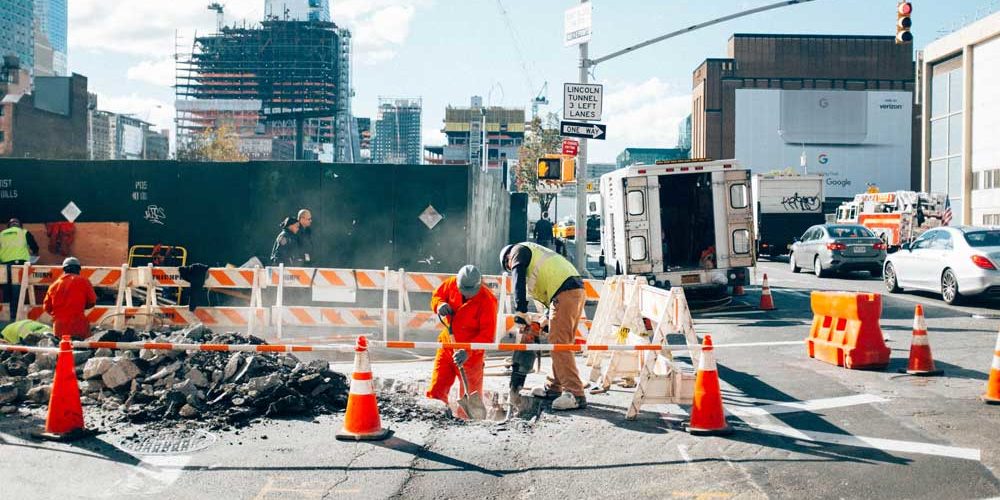
In the society in which we live, the roads are underestimated and are traveled every day, to go to work, to study or to take a trip out of town, taking for granted their presence. Roads play a crucial role, and even if it may seem extreme, they promote development and the fight against poverty, because if you think about it, without the possibility of moving, you cannot carry out what are considered daily activities.
The European road system consists of 5.5 million km, or EUR 8000 billion. Despite the immense value that this system possesses, the weather is usurping it, therefore requiring maintenance, renewals and modernizations. It is well known that negligence is often the most common route, leading to the irreversible deterioration of the road system in this case, imposing repairs that, after a few years are in vain and the exorbitant costs impact on the national economy.
According to this idea, the administrations have the duty to employ with care the profits, otherwise the results, visible also in some of the member states of the European Union, are uneven and neglected roads. If we were to act strategically, the profits would not be wasted, the long-term needs balanced and the interested parties satisfied, but apparently it seems a complex equation to be implemented.
The management of the road patrimony involves the application of engineering, financial and managerial practices in order to optimize the level of service so as to obtain the more convenient financial input. In fact, the main objective is to carry out work at the right time, without encountering the accumulation of maintenance synonymous with negligence. It is important to emphasise that road infrastructure is a financial asset for society and the economy.
You can understand how the road network is a treasure that has yet to be discovered and its potential maximized; every day we have, unknowingly, under our feet a golden goose.